


11-02-2011, 01:26 PM
First up, thanks for walking this through with me. Painting is my worst area, and its always been something thats been difficult for me to master. Hopefully, I'm not to much of a pain!
Basically-
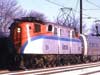
Fluted Area- Chrome
Flat Area- Stainless Steel
Window band- Black/Dark Gray
The Whole car- GLoss Black base Coat
The problem is, If anything other than the plastic itself is beneath the gloss base coat, it may also inhibit the mirror reflective finish. This will translate to the Chrome that is painted over it. If you painted the Chrome onto the Stainless Steel, the Chrome would not have a mirror finish. I know this from experience, and even used it to create areas of "dull" chrome on the window band of one of my Arrow III cars a few years ago.
That is the sensitive nature of the paint.
Essentially, these means that I cannot paint the entire care Stainless Steel first, since this would interfere with the Chrome. This means that the only two layers of paint that can be on the fluted areas must be the Gloss BLack and the Chrome, otherwise I might as well just spray it silver. I'm merely trying to represent the variety of finishes on the prototype.
Since I can't have the Stainless Steel paint in the fluted areas, I'll have to mask the fluted regions.
This makes sense, and I can see now why earlier attempts at masking were not as successful.
I think I might have to practice both ways, since both seem kinda tricky. I can't imagine painting such a thin pinstripe and keeping it all perfect. I'll have to devise a method for cutting long straight strips of masking tape. i do have a razor paper cutter available, I bet that will work.
Will the decal make a smooth curve, or will it have a tendancy to make a somewhat kinked curve? I didn't consider that the decal solution my flatten the "raised" areas, But now I can see how that may work.
The main area of concern appears to be the part # 41-027. At the end of this part, where the tip assemly screws in, there are two holes. One large centered hole where the pin fits through, and then one much smaller hole offset to the left that appears to be where the paint is sucked in from. I have not managed to be able to effectively work a pipe cleaner or other implement all the way through this hole, but I strongly suspect there is paint stuck in there.
Regardless, I'm going to check the airbrush again. I may be missing something.
doctorwayne Wrote:You've sorta lost me here: the colour for the non-fluted area is applied first to the entire car. When cured, all of the car that is to remain this colour or to later be painted black is masked-off. Next, apply the paint(s) as required to the fluted areas - if it requires a black or glossy coat first, do so, then apply the Alclad. This could all be done with the initial masking. When that paint has cured, remove the tape as necessary and re-mask to paint the black area around the front end.
Basically-
Fluted Area- Chrome
Flat Area- Stainless Steel
Window band- Black/Dark Gray
The Whole car- GLoss Black base Coat
The problem is, If anything other than the plastic itself is beneath the gloss base coat, it may also inhibit the mirror reflective finish. This will translate to the Chrome that is painted over it. If you painted the Chrome onto the Stainless Steel, the Chrome would not have a mirror finish. I know this from experience, and even used it to create areas of "dull" chrome on the window band of one of my Arrow III cars a few years ago.
That is the sensitive nature of the paint.
Essentially, these means that I cannot paint the entire care Stainless Steel first, since this would interfere with the Chrome. This means that the only two layers of paint that can be on the fluted areas must be the Gloss BLack and the Chrome, otherwise I might as well just spray it silver. I'm merely trying to represent the variety of finishes on the prototype.
Since I can't have the Stainless Steel paint in the fluted areas, I'll have to mask the fluted regions.
Quote:If you have to mask over the fluting, burnish the tape as it's applied - while it's not under tension. Press it down into each depression in the fluting as you come to it, then apply and burnish each subsequent flute as you reach it. Probably the main cause of bleed-under at irregular surfaces is the fact that the tape is first stretched over its entire length, then worked down and burnished into the depressions. Each subsequent one that you burnish puts more stress on the strip of tape, so, by the time you've finished taping and burnishing, the tape on the areas done earlier is already returning to its original stretched (and no-longer-burnished) state.
This makes sense, and I can see now why earlier attempts at masking were not as successful.
Quote:You've already made a template/mask which follows the upper edge of the lower green area - simply re-apply it (or a fresh version of the same), then apply a strip of tape 2" or 2 1/2" wide, then a strip of suitable width to cover the majority of the light coloured band. Above that, apply another 2" or 2 1/2" strip of tape and then tape, in narrow strips or wide, as necessary, to cover all of the other areas that are to remain green. Remove both 2"/2 1/2" strips and apply your red paint on the exposed stripe areas.
If you use decals, straight stripes can be made to conform to curves - take your time and concentrate on the long (upper) edges of the stripe - the lower edge will pucker and may lift slightly in some spots, but don't worry about it. When it's in place to your satisfaction, carefully apply decal setting solution, which should make any puckered or lifted areas snuggle down. Touch-up with paint or small bits of decal stripe where necessary.
I think I might have to practice both ways, since both seem kinda tricky. I can't imagine painting such a thin pinstripe and keeping it all perfect. I'll have to devise a method for cutting long straight strips of masking tape. i do have a razor paper cutter available, I bet that will work.
Will the decal make a smooth curve, or will it have a tendancy to make a somewhat kinked curve? I didn't consider that the decal solution my flatten the "raised" areas, But now I can see how that may work.
Quote:The construction of your airbrush looks quite similar to my Paasche VL. To clean it, regardless of what type of paint I've been spraying, I run a colour cup-ful of lacquer thinner through it, then disassemble it completely. The three parts comprising the tip go into some clean lacquer thinner in the cup and the needle is wiped with a rag dampened with thinner. To clean the body of the airbrush, dip a pipe cleaner in lacquer thinner, then poke it completely through the needle passageway, then through that of the paint supply. It's difficult to tell from the drawing, but if Part 41-016 is hollow, run the pipe cleaner through there, too.
Wayne
The main area of concern appears to be the part # 41-027. At the end of this part, where the tip assemly screws in, there are two holes. One large centered hole where the pin fits through, and then one much smaller hole offset to the left that appears to be where the paint is sucked in from. I have not managed to be able to effectively work a pipe cleaner or other implement all the way through this hole, but I strongly suspect there is paint stuck in there.
Regardless, I'm going to check the airbrush again. I may be missing something.
Modeling New Jersey Under the Wire 1978-1979.
![[Image: logosmall.png]](http://i543.photobucket.com/albums/gg445/CAB_IV/Model%20Trains%202013/logosmall.png)