
Juneco/ Keystone Danby sawmill
#1
I was looking for a small sawmill for my logging camp and found an old issue of Keystone's Dandy sawmill. The was however copied here in Canada by Juneco and that's the model I bought. The kit was advertised and started but complete.
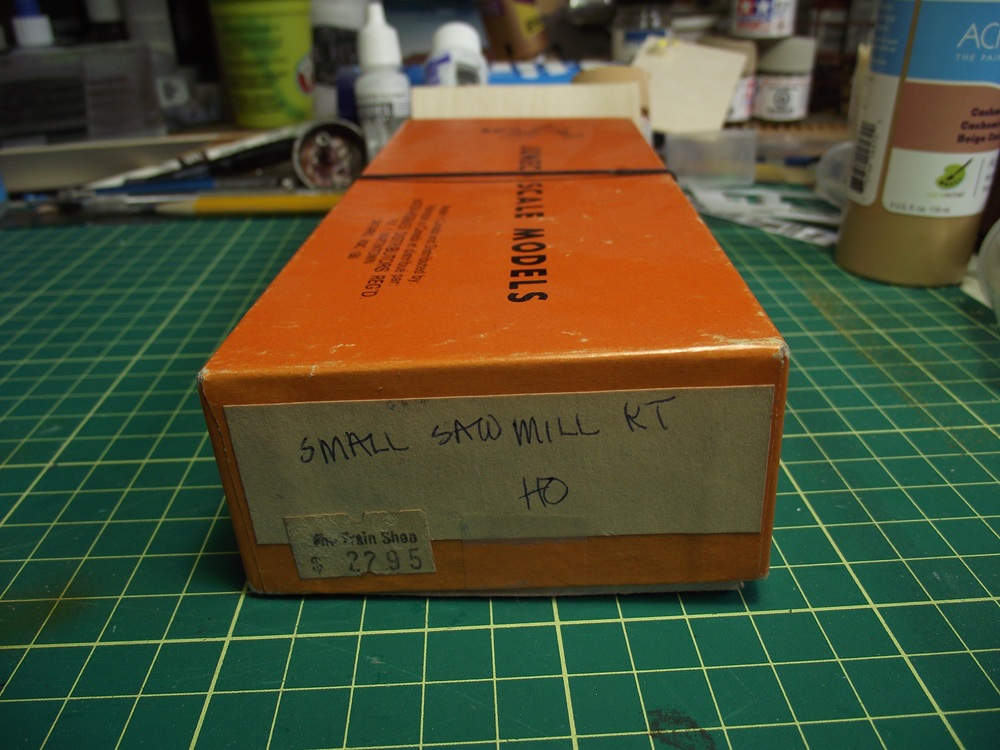
   

However when I opened the box I had my doubts.
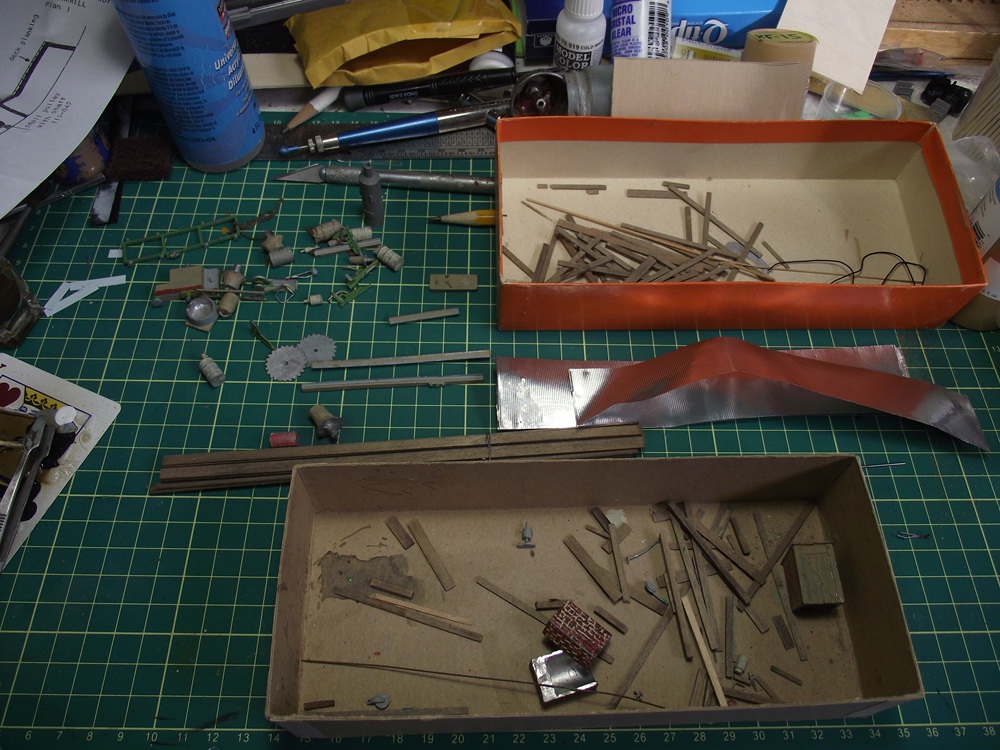
   

The wood content in the box seems a bit thin. I do believe that all the metal castings are present and that's what it most important.
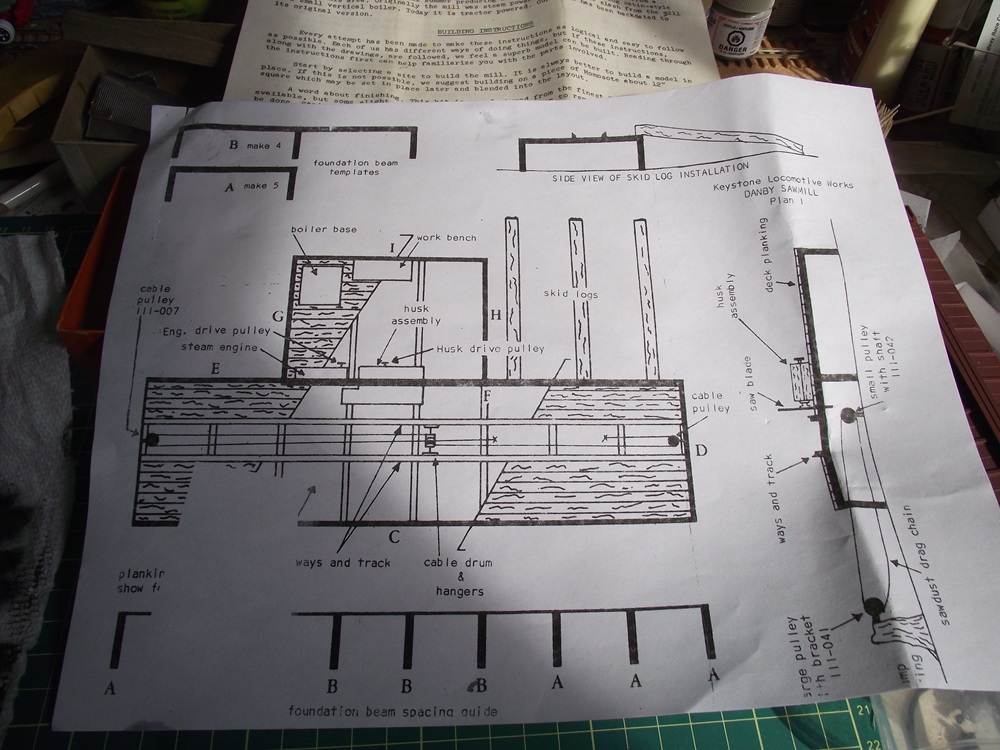
   

It is a pretty small sawmil. The footprint is about 4 X 7". Mostly I'm thinking it's a rough-cut sawmill that supplies the logging camp's needs and sends surplus rough cuts to other customers.
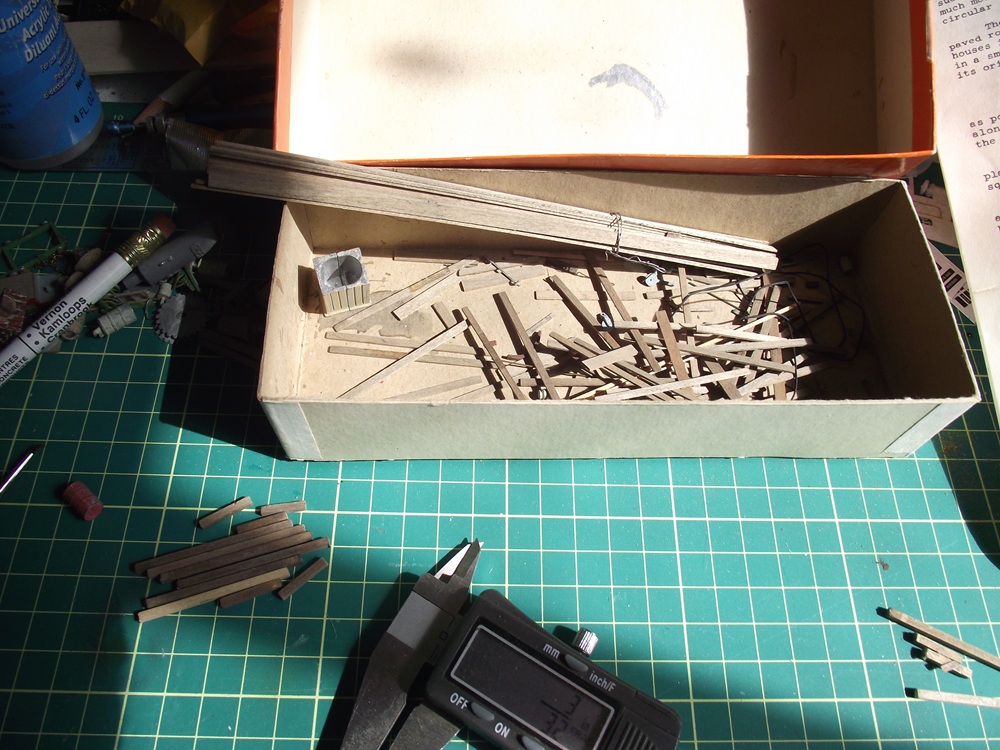
   

The first step is to build the foundation beams. A quick inventory of the wood strips  and I found that all those parts were missing. 
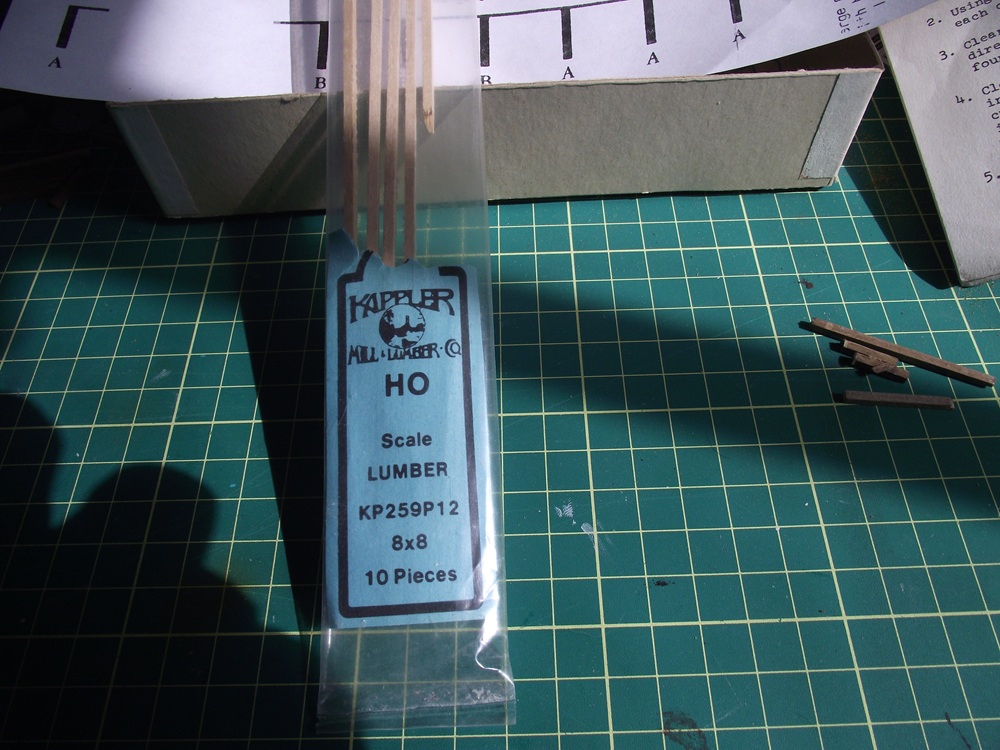
   

I did have a pack of scale 8X8 from Mt. Albert scale lumber that fit that was the same size. 
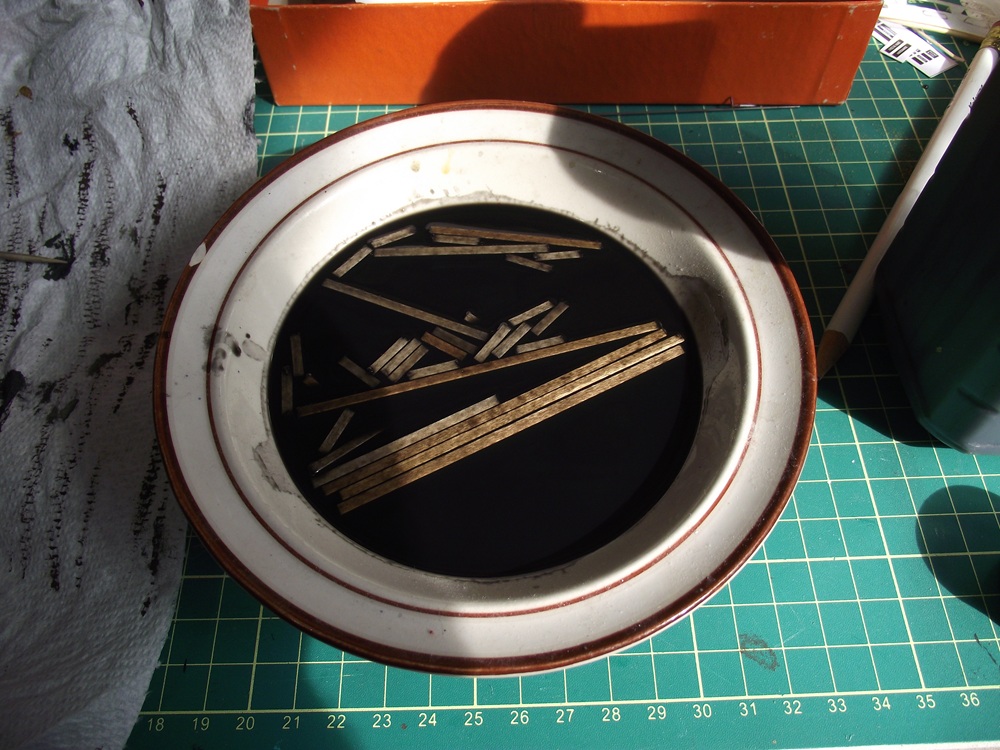
   

I cut all the parts needed and thay went into an Alcohol and India Ink bath. They're currently drying before I start assembly.

Reply
#2
Glen, it looks like another interesting project to watch.
Thanks for sharing it with us again!

Greg
Reply
#3
Thanks Greg. This will be a fun one I'm sure.


I built the nine foundation assemblies using a photocopied set of the plans to build a jig. 
   
and I made a plywood base to build it all on. I painted the base in a tan brown and added Woodland Scenics blended earth ground cover as a basic scenery primer to build on.


I glued the foundations to the base. The plans come with a spacing template. to keep the foundations straight I stretched a rubber band around the base a little more than an inch from the edge to give me a non-permanent straight line. 


Then I added the sawdust chain. This was used to drag sawdust out from under the main saw while the mill was in operation. There is a pulley under the mill where the saw will go and the other pulley attached to the tree stump. I theaded the chain around the two pulleys.


And then I added sawdust and wod chips around the chain and a pile by the stump. Easier to do now than later.


I also discouvered that the floor planking was missing as well but I was able the find some scale 2X10 that was almost the same size. I'm starting to wonder just how much of this project I'm going to have to fabricate myself.
I've stopped for now as I'm also missing some of the carridge track and will have to make that myself as well.
Reply
#4
Looking good so far Glen. Can't wait to see the finished building.
Matt
Conrail's Blairsville Cutoff - A Fictitious Alternative Route Over The Allegheny Mountains From Blairsville, Pa to Cresson, Pa
Milepost 296.0 to Milepost 250.0
Reply
#5
Thanks Matt.

Another day, another missing part(s)

The next step is to install the carridge ways and rails but I found that 2 of the six parts were missing. They are all cast metal, representing the beams (ways) that the carrige rails ride on. I made some quick measurments and found that the ways are 8X8 so I had that from the foundation parts. I then used some brass rod to fabricate the rail.


It's not exactly like the original parts but not a bad stand-in.


I painted the brass rod with some oily steel 


I then finished the floor planking. Next is the sawmill machinery.
Reply
#6
Some more progress


I installed the boiler and the  boiler foundation


I painted the brick foundation in a primer greay, then semi dry-brushed the bricks in three brick colors. I also painted the boiler in polly-s tarnished black followed by a light brush over of engine black.
The floor is cut to insert the foundation and everything is glued down.


Next is the two cable pulley's. But wouldn't you know, they're also missing. 
I was going to full-on scratchbuild a pair but I found this in my parts box:
   
I think it's from a crane kit but it has a pulley on either side so I can just cut them off and use them instead.
Reply
#7
It's amazing how many pieces of this kit were not included. The seller got a much better end of the deal that you did, Glen! Great way to innovate, however!
Check out my "Rainbows in the Gorge" website: http://morristhemoosetm.wixsite.com/rainbows
Reply
#8
The seller sure did make out on this but you are making out better with it. The progress you've made so far is awesome. You can add your own touch to it with making the parts that are missing. That's the fun part in my opinion I think.
Matt
Conrail's Blairsville Cutoff - A Fictitious Alternative Route Over The Allegheny Mountains From Blairsville, Pa to Cresson, Pa
Milepost 296.0 to Milepost 250.0
Reply
#9
Someone in Britain described "making a locomotive using parts from X's kit".
David
Moderato ma non troppo
Perth & Exeter Railway Company
Esquesing & Chinguacousy Radial Railway
In model railroading, there are between six and two hundred ways of performing a given task.
Most modellers can get two of them to work.
Reply
#10
I think I have come to the point where the previous builder stopped.I suspect that the rest of the parts are here, with the exception of some of the wood.

I fabricated the new pulleys:


Just a bit of filler styrene and some shaping with the demel


I pinned each one to the end foundation frame after painting them black. I then attached the cable drum to the center/ middle of the guideway.

I've spent the last week building the internal machinery. Starting with the saw husk:


and the steam engine
   

and finally the log carriage 


The carriage was the most challenging with the wire handles and linkages. The log is a pruning from some bush in a friend's back yard. I need to find out what it is, I could use some more.


With all the machenery done, it's time to install it. I started with the Husk. The plans give the right location but you have to cut a slot in the mill floor to clear the saw blade. the engine comes next, lining up the drive pulley on the engine with the pulley on the husk.
Next will be the carriage.
Reply
#11
Love the carriage. That's gonna look great on the rails of the mill.
Check out my "Rainbows in the Gorge" website: http://morristhemoosetm.wixsite.com/rainbows
Reply
#12
Thank you.

Now it's starting to look like somehing:


I added the log carriage and the cable to the mill.


the cable (thread) goes around the cable drum three times, then through the pulleys on each side then endine one each end on the carriage itself. there was a fair amount of tweezer work the use of CA glue in this operation.

Next, the walls.
Reply
#13
this is a great build!
--Hillyard
Willamette City Belt Line: WCBL
 Virtual Interchange 
Reply
#14
Glen, you have done a wonderful job of fabricating the parts that you found were missing.
It's really starting to look like a working sawmill, nice work!

Greg
Reply
#15
Thank you, the missing parts arn't that big of a deal. I'm fortunate that I have a good collection of scale lumber and a decent scrap drawer that I can draw on for replacements. If the kit was missing any of the main machinery parts, then I'd be in real trouble.
These earlier craftsman kits are primarily a bunch of sticks and plans in a box. As long as the plans are included, you can fabricate the rest.

Speaking of frabricating:


I built the walls over that last few days. The longest has full framing and sheeting. I added a doorway to it as there wasn't one before for clean-out of the mill floor on that side of the carriage. I pinned the plan and a sheet of wax paper over a block of insulation foam and pinned the framinf in place as I glued it together.


I framed the other walls the same way 


It took a couple days to cut, stain and assemblt the wall parts. I changed the construction somewhat as I wanted the one side of the mill to be open. I remember a 1984 Model Railroader magazine article by Bob Boudreau. He built that same sawmill for his Fundy Northern Modules , leaving the same walls open for viewing. 


Then it was fairly simple to install the walls on the model. They fit well, with only a few modifications and clamping while the glue dried.
Reply


Forum Jump:


Users browsing this thread: 1 Guest(s)